
At first glance, the still wild Alps, in the heart of Europe, may seem to have little in common with the high-tech of space flight. Yet it is precisely here that an important research and tourist magnet of international significance for space flight could emerge. Space flight is currently experiencing a profound transformation due to the rapidly advancing commercialization. An increasing number of companies are offering launch services into orbit, enabling new satellite constellations to be set up with unprecedented speed and cost efficiency. At the same time, the major space agencies, including the American NASA and the European ESA, are planning manned missions to the moon and later to Mars. These developments are associated with major technical and scientific challenges. Among others, zero gravity or microgravity in space is one of the major difficulties. For example, microgravity is responsible for many negative medical effects in astronauts. But microgravity also requires new technical solutions, for example in the handling of liquids or granules. On the other hand, microgravity also offers new opportunities for research and development. For example, proteins could be crystallized into much larger structures or metal alloys could be produced with unprecedented homogeneity.

Despite these developments in recent years, access to space is still limited and associated with high costs. For this reason, basic research and the development of new technologies often rely on simpler platforms that bring samples into free fall and thus into microgravity. One unbeatably cost-efficient option is the drop tower, such as the European drop tower in Bremen (Germany), which enables microgravity for just a few seconds. However, drop towers are not designed for experiments on and with humans and therefore require a medium degree of automation for the experiments. In contrast, parabolic flights are manned, which enables more complex setups and human medical experiments. Parabolic flights offer microgravity of up to approx. 20 seconds. For longer periods of microgravity, suborbital rockets are required, which typically allow six minutes of microgravity. This platform is also unmanned and requires a high degree of automation. Due to the high costs, rockets are used relatively rarely compared to drop towers or parabolic flights.
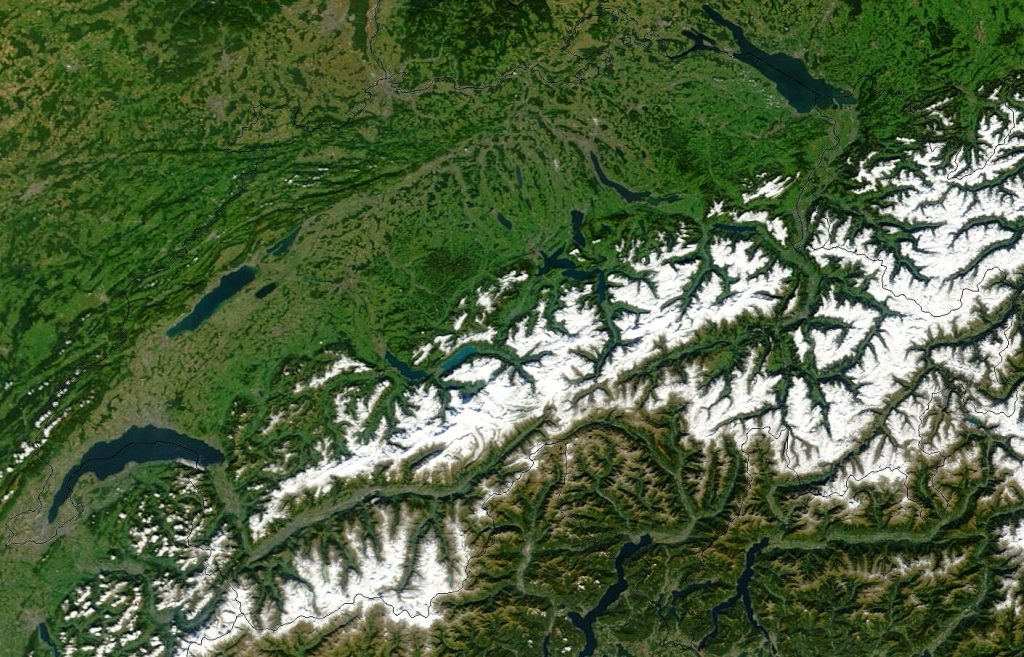
The European Alps would be the ideal location for a new and globally unique microgravity platform. Essentially, either in a high vertical shaft or on a high rock face, a kind of high-performance elevator could be built that can perform vertical parabolic profiles and thus enable microgravity for more than 10 seconds. Similar to parabolic flights, this platform could be manned and would therefore have the same advantages. Compared to all other manned microgravity platforms, however, our “AlpGE” project idea could be operated entirely with renewable energy, would be more easily available and less expensive. “AlpGE”, which stands for “Alpine Low Gravity Exploration”, would not only be highly interesting for international research, but also as a tourist attraction. “Space tourism” is a new, fast-growing market. More and more people are affording themselves the once-in-a-lifetime experience of microgravity, for example by means of a commercial parabolic flight. “AlpGE” could enable a broad population to experience microgravity on their own bodies without placing a heavy burden on the household budget and the environment.
There is no doubt that “AlpGE” would be an infrastructure of international importance and an asset for European industry and research community. The most accessible microgravity for humans and large payloads will be in the Alps: innovative, globally unique and sustainable space research and development.